
Why Does ABS Matter When Choosing a Scooter?
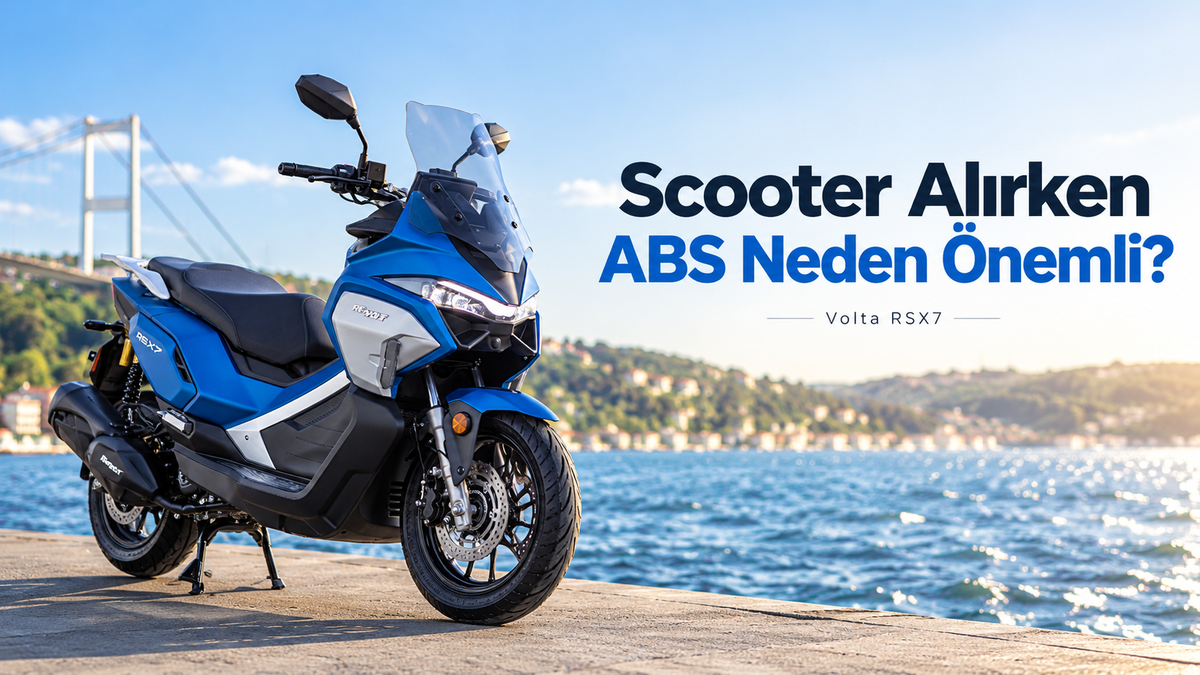
When choosing a scooter, engine power, fuel consumption and design immediately catch the eye. But what helps when you need to brake unexpectedly? This is why an anti-lock braking system (ABS) matters.
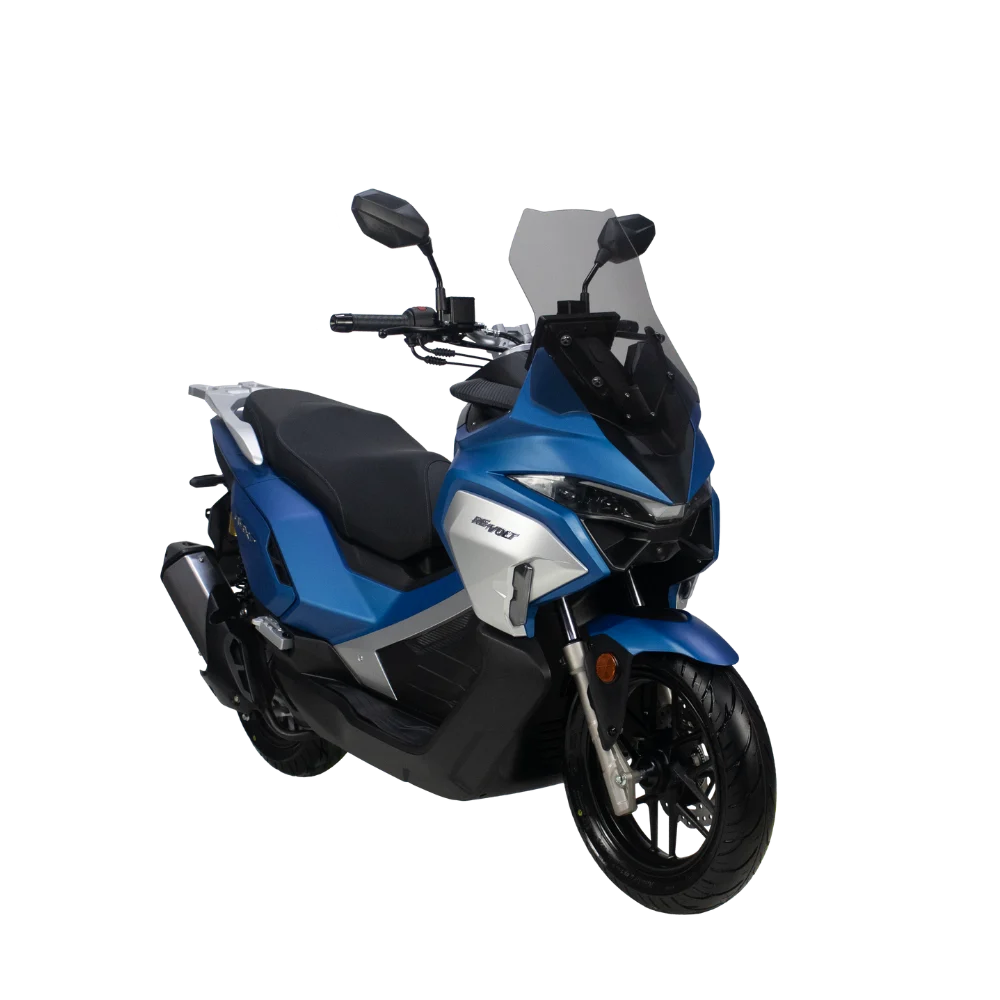
Volta RSX7 with ABS
The 150 cc-class RSX7 features front and rear ABS-assisted disc brakes, ADV styling, automatic transmission and equipment for everyday use.
ABS in 30 seconds
ABS helps maintain directional control by reducing the risk of wheel lock during hard braking. It does not create additional grip; it helps you use the available grip with greater control.
How ABS works: three steps
The Anti-lock Braking System manages brake pressure electronically, without requiring a separate action from the rider.
- Sensors monitor wheel speed. Wheel-speed sensors track rotation.
- The system detects a risk. The electronic control unit identifies the risk of wheel lock.
- Pressure is adjusted. Brake pressure is reduced and regulated to help the wheel keep turning.
A slight pulsing sensation in the brake lever can occur when ABS activates as the system regulates pressure.
Research findings
A study published by IIHS in 2022 found a 22% lower rate of fatal crash involvement for motorcycles equipped with ABS. This association was based on US records for 65 models from 2003–2019. It is not an RSX7-specific test result or a guarantee of individual risk reduction. Read the study.
Where can it help in everyday riding?
- Busy traffic: reduces the risk of wheel lock under hard braking when a vehicle ahead stops suddenly.
- Rain: supports more controlled braking within the grip available on wet asphalt.
- Unexpected obstacles: may improve the chance of retaining directional control while braking.
ABS does not always shorten stopping distance
Braking distances can vary on wet, sandy or loose surfaces. ABS does not increase tyre grip. Safe speed, tyres in good condition and an appropriate following distance remain essential.
Are ABS and CBS the same?
ABS focuses on preventing wheel lock during hard braking by electronically regulating brake pressure.
CBS, a combined braking system, helps distribute the rider's braking force between the front and rear wheels.
These systems perform different functions. A specification that lists “disc brakes” alone does not mean a scooter has ABS.
Three questions to ask before choosing
- Which wheels have ABS? Single-channel and dual-channel systems differ.
- What is the condition of the tyres and brakes? ABS cannot replace well-maintained brakes or suitable tyres.
- Is service support accessible? Regular brake-system inspection matters.
When choosing a scooter, consider how controllably it can stop when needed as well as how fast it can go. Explore the Volta RSX7's equipment for an example of a scooter offering ABS.